Saba interviews her grandmother, who owned a salon in Tehran in the 70’s and 80’s
An oppressive regime, a defiant people, endless discussions of oil, and strained relations with the West. While these headlines dominate the conversation, they tell only one side of the story and rarely capture the lives of ordinary Iranians.
So, to discover a different perspective, who better to ask than my Persian grandmother? Through an interview about her years after the revolution as a hairdresser in Tehran, I got a glimpse into the everyday life of a city often misunderstood.
Following the Iranian Revolution in 1979, which led to the establishment of the Islamic Republic, new rules were introduced that the public had to follow. For example, a new dress code was put in place, requiring both men and women to dress more modestly. Most famously, women were now required to wear the hijab in public.
So where did that leave mamanjoon, a hairdresser in a luxury salon in Tehran?
Well, don’t worry, these fashionable ladies didn’t stop their quest for fabulousness. They simply pursued it behind closed doors.
Beauty trends, often reflecting those in Europe, were closely followed by fashion-conscious Iranian women. Mamanjoon recalled that one of the biggest trends at the time was elegant updos, especially for blushing brides. This dedication to fashion was a true testament to their resilience in the face of the dramatic changes brought about by the new regime, and salons acted as their sanctuary to do so.
Weddings were a perfect example of this, with women going above and beyond to look their best for their own, or their friends’, special day. How did they get away with it? Secrecy… well, not exactly. Weddings had separate halls for men and women, allowing women to remove their hijabs and celebrate together while still complying with the new laws. Even so, there was always a chance of trouble, so it was wise to keep an emergency cover-up to hand. Salons also had strict rules to protect their clients’ privacy and were regularly checked to ensure there were no outside viewpoints into the premises.
Mamanjoon is a very stylish lady, you’d think her natural state is being dolled up and ready to go. Under the new regime, however, this wasn’t always tolerated. In the early years, even wearing makeup in public was prohibited, something I can’t imagine my grandmother ever going without. She recalled one occasion when she was denied entry to a park with her children because she was wearing makeup. Before she was allowed in, she had to wipe it all off.
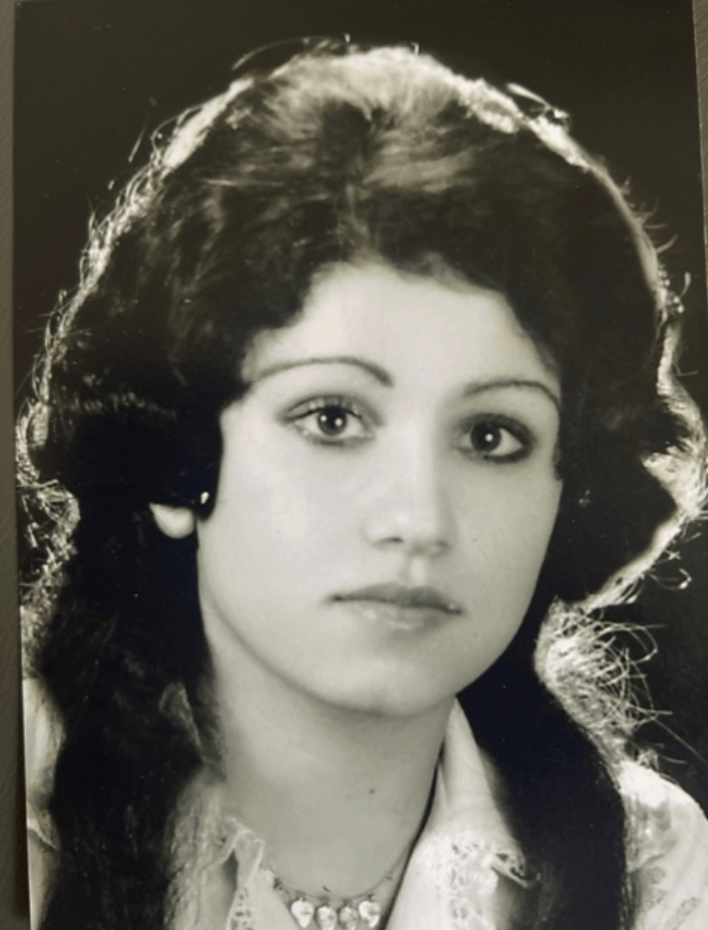
My grandmother was just 19 when the Revolution began, so she never experienced the buzz of a Tehran salon before it. The photograph below was taken when she was 18, just after she had finished school. It should have been a time filled with opportunity, as she began looking for work. Just a few years earlier, jobs had been plentiful, and women had greater opportunities to build careers and progress professionally.
But after the Revolution, everything changed. Soon after my mamanjoon finished high school, the universities closed for a period while their curricula were rewritten to align with the new Islamic government. Then came the War. Just when things were looking up, many young people’s ambitions, including those of women hoping to build successful careers, were forced to shrink as they came back to their new reality. Opportunities became sparse, and women were unlikely to hold positions of power than they had been before. My mamanjoon had dreamed of becoming a nutritionist and had been accepted into university, but when the universities closed, her plans were put on hold. Soon after, she had her first child, and the path she had once imagined for herself was one she never got the chance to return to.
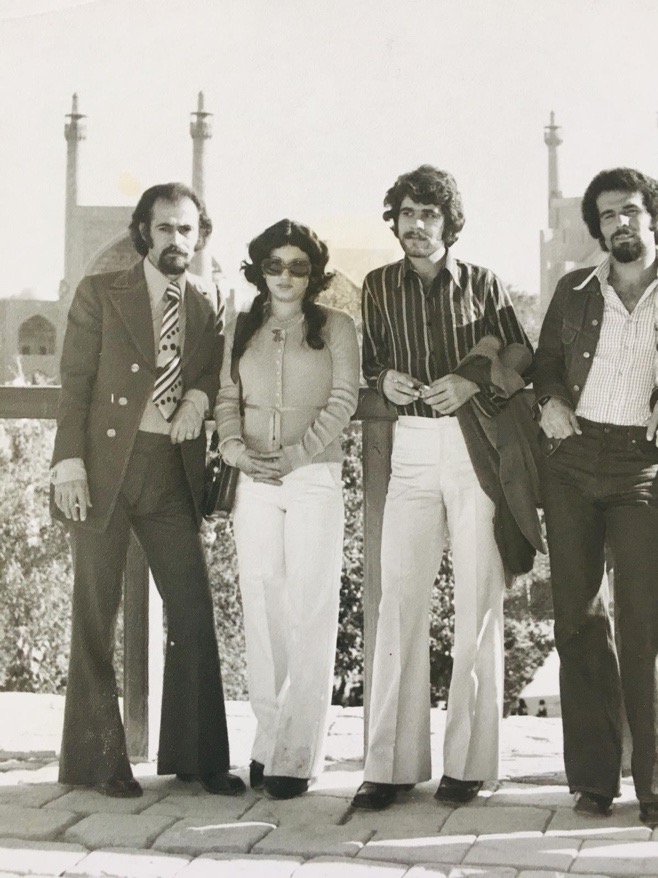
My mamanjoon used the word freedom a lot when discussing her youth during our interview. Below is a photograph of her, my grandfather, and their friends exploring Isfahan just one year before the Revolution. She told me they would often meet tourists from all over the world, and my grandfather would always strike up a conversation with them. Whilst she is more the fashionista, you must note how snazzy my grandfather (on the left) looks in bellbottoms.
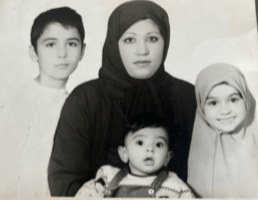
My grandmother’s passport photo, taken a few years later, tells a different story. It reflects how women were expected to appear in public after the Revolution. My mother, the little girl in the photograph, was just seven years old and was also required to wear the hijab in public.
My family was never in support of the Revolution,so the following years led them to flee the country. There was one moment that made my grandmother realise her children would never be safe under this regime, in this new Iran.
When my uncle was 12, he was a huge fan of American music, which was also banned at the time. One day, he went to the park wearing a T-shirt featuring his favourite American boy band. He came home with a broken nose, courtesy of a fervent regime supporter who saw the shirt as an act of dissidence. My mamanjoon still remembers the man’s name.
A few years later, my family left for the UK. This decision was not the result of one act, but of many: the growing unrest among the Iranian people, who were slowly realising they had been lied to yet again; my mother sneaking out with her friends to protest, only for some of those friends never to come home; and my grandfather’s political opposition to the regime, for which he was beginning to get noticed. Eventually, he had to flee the country before the regime could send him to a prison he would never return from. The rest of my family soon followed. By then, no one had a reason to stay. In the words of Warsan Shire, «No one leaves home unless home is the mouth of a shark».
When I asked my grandmother how salon life in the UK compared with Tehran, she returned to a word she had used throughout our interview: freedom. In post revolution Iran, there was always an element of concealment, of hair, of your body, and sometimes even of yourself. Salons became a refuge where women could let down their hair, both literally and figuratively, without fear of judgment. Outside the salon, they were closely watched, forced to hide parts of themselves and return home with their rebellious expressions of identity concealed. But inside, even if only for a while, the regime had no reach. There was no one telling them what they could or could not wear; there was simply a space shared between women who understood the same restrictions and the same longing for liberty.
By the end of our conversation, I realised that her years in the salon were not just about hairdressing. They were about resilience, silent rebellions, and the quiet ways people preserve a sense of themselves when so much around them changes. Above all, it was a story about freedom, the word my mamanjoon never stopped coming back to.
Saba Mansouri

